Watching the Low-Altitude Sky: The Global Drone Detection Market Through 2030
Drone detection is becoming an important layer of military protection, infrastructure security, and airspace management. Public analyst forecasts imply roughly $2.7–$3.5 billion in annual detection-market revenue by 2030 — but commercial success depends on reliable identification, affordable deployment, and lawful response.
Research current to 26 October 2026. All market values are in US dollars.
Executive summary
Drone detection is becoming an important layer of military protection, infrastructure security, and airspace management. Demand is expanding, but commercial success depends on reliable identification, affordable deployment, and lawful response procedures. Public analyst forecasts imply roughly $2.7–$3.5 billion in annual detection-market revenue by 2030, although incompatible definitions prevent a precise consensus. Integrated sensors, adaptable software, and recurring services offer promising opportunities. Regulation, false alarms, and rapidly evolving drones remain substantial constraints.
From spotting drones to managing airspace risk
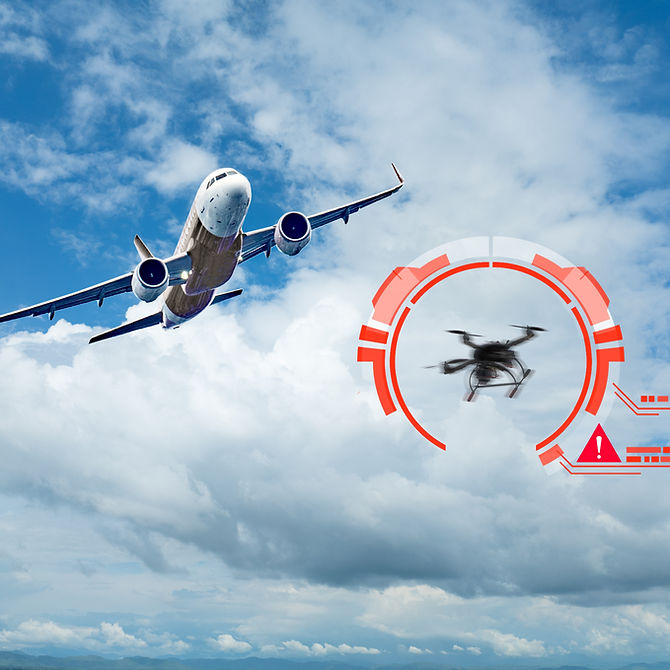
A small aircraft can create a large operational problem. An unidentified drone near a runway, electricity substation, prison, or military installation forces an immediate decision: ignore it, investigate it, or interrupt operations. Detection systems provide the information needed to make that decision.
Their functions include discovering an aircraft, locating and tracking it, classifying the object, and — where technically possible — identifying its model or associated transmitter. However, identifying a drone does not establish hostile intent.
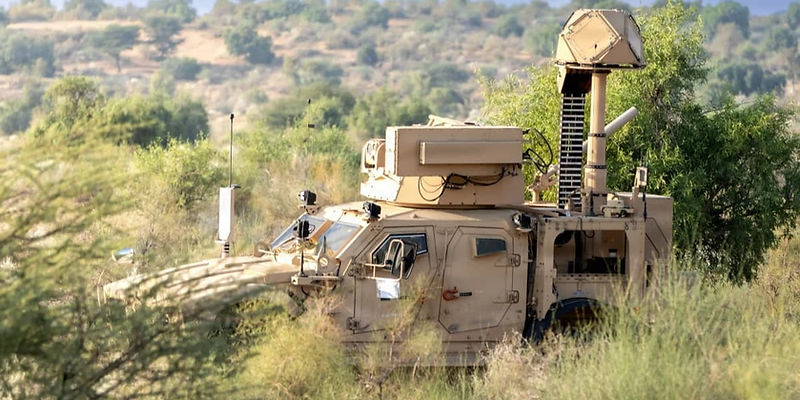
Detection must also be distinguished from mitigation. Radar and cameras observe; jammers, takeover systems, and interceptors attempt to influence or stop an aircraft. Integrated counter-uncrewed-aircraft systems, or counter-UAS platforms, can combine both. Their total market is therefore broader than the detection market discussed here.[1]

Market size: strong growth, imperfect measurement
There is no universally accepted public accounting of global detection revenues. Commercial research firms estimate the market using their own coverage, segmentation, and forecasting methods.
MarketsandMarkets estimates $1.14 billion in 2026, rising to $3.34 billion in 2031, with 24% compound annual growth. Applying that published rate for four years implies approximately $2.70 billion in 2030; this is an author calculation, not a separately published forecast.[2]
Grand View Research estimates $729.8 million in 2024 and forecasts $3.36 billion in 2030, reporting 29% annual growth for 2025–2030.[3] Fortune Business Insights presents a higher starting point: $2.03 billion in 2026, reaching $6.12 billion in 2034 at 14.8% annual growth. Interpolating its growth rate implies approximately $3.52 billion in 2030.[4]
These figures suggest a useful planning range of approximately $2.7–$3.5 billion by 2030. It is neither a statistical confidence interval nor an independently verified market total. Differences can reflect hardware-versus-service coverage, treatment of integrated platforms, geographic information, and assumptions about procurement. The public summaries do not provide enough methodological detail to reconcile every discrepancy.
Investors should consequently test a supplier’s actual addressable customers and revenue mix rather than apply a headline growth rate indiscriminately.
The technologies: complementary strengths, unavoidable gaps
Effective detection usually requires several technologies because each observes a different characteristic of the aircraft.[1][5]
Radar measures reflected radio energy to locate and track objects. It can detect aircraft without relying on their control transmissions. Small targets, ground clutter, and distinguishing drones from birds create challenges; performance depends on the radar, terrain, and installation.
Radio-frequency detection listens for drone control, telemetry, or video transmissions. Depending on the system and protocol, it can support identification and transmitter location. Its central weakness is dependence on observable emissions: an aircraft operating without a detectable radio link can escape this layer.
Electro-optical cameras provide visual confirmation and evidence. Infrared cameras detect thermal contrast and support observation in darkness. Both require suitable lines of sight, and performance varies with weather, distance, background, and target characteristics.
Acoustic sensors recognize sound signatures associated with motors and propellers. They can supplement other sensors, but wind, traffic, machinery, and limited practical range constrain their usefulness.
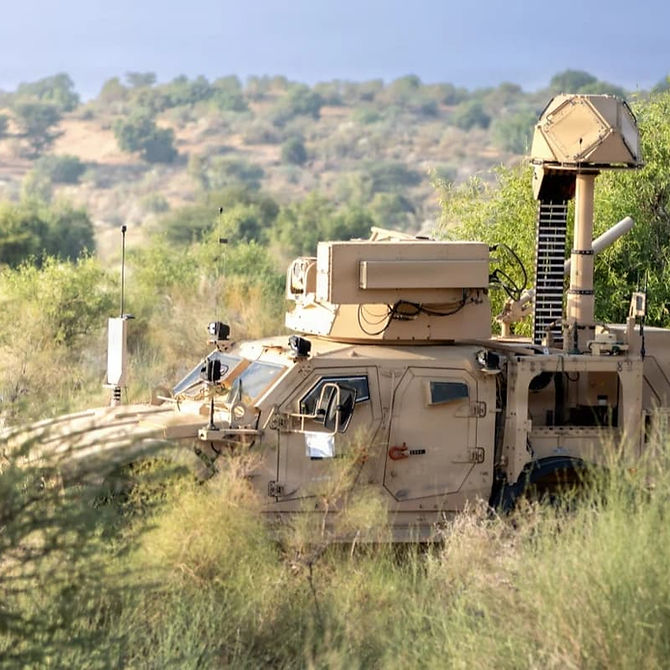

Integrated platforms combine these observations into a common track and alert. A radar might locate an object, direct a camera toward it, and associate its movement with an RF signal. This can improve confidence, although poor integration can also duplicate tracks or combine unrelated observations.
Artificial intelligence and machine learning support classification, signal recognition, and sensor fusion. A 2025 research paper demonstrated radar–acoustic fusion in outdoor experiments, illustrating the technical direction rather than proving universal commercial performance.[6] Buyers should demand testing against unfamiliar drones, realistic background activity, and changing conditions.
What is driving adoption?
Commercial drone use creates both economic value and a more complicated airspace picture. Inspection, surveying, delivery, and emergency-response operations increase the need to distinguish authorized flights from unexpected activity. Growth in legitimate traffic does not automatically mean equivalent growth in hostile incidents.
Military demand is more immediate. Bases, logistics facilities, deployed forces, and mobile vehicles need warning against reconnaissance and attack drones. NATO’s 2026 work on connecting counter-UAS systems to command-and-control networks demonstrates the importance of integration across suppliers.[7]
Civilian purchasers have different priorities. Airports emphasize safe operations and avoiding unnecessary disruption. Energy operators, industrial facilities, ports, and telecommunications sites prioritize continuity. Prisons seek warning of contraband deliveries; police and event organizers require temporary coverage and evidence.
The FAA’s airport testing programme highlights why deployment is not simply an equipment purchase: counter-drone systems must coexist safely with navigation, communications, and airport operations.[8]
- More legitimate drone activity — principal barrier: distinguishing authorized flights from threats; commercial opportunity: airspace monitoring linked to operational permissions.
- Military and security threats — principal barrier: rapidly changing aircraft and tactics; commercial opportunity: upgradable, mobile, multi-sensor systems.
- Critical infrastructure protection — principal barrier: large sites and high installation costs; commercial opportunity: shared monitoring and phased deployment.
- Airport and event safety — principal barrier: false alarms and interference risks; commercial opportunity: validated detection with clear response procedures.
- Expanded government authority — principal barrier: certification, privacy, and accountability requirements; commercial opportunity: compliance support, training, and auditable software.
Analytical synthesis of the sources and market conditions discussed above.
Innovation, partnerships, and investment
The industry’s development is increasingly about complete operational systems. Compact sensors, mobile installations, software updates, and connections to existing security platforms can matter as much as detection range.
Corporate transactions demonstrate this shift. Axon completed its acquisition of Dedrone in 2024, bringing airspace security into a wider public-safety platform.[9] Motorola Solutions completed its $1.5 billion acquisition of D-Fend Solutions in August 2026.[10] That transaction concerns a counter-drone company with mitigation capabilities; its purchase price must not be confused with annual detection-market revenue.
Partnerships address integration and distribution. In June 2026, DroneShield and Defenture announced a memorandum of understanding covering mobile counter-UAS opportunities, vehicle integration, testing, and interoperability.[11] An MOU signals commercial intent, not guaranteed orders.
For investors, these examples support interest in acquisition-led expansion and complementary technologies. They do not establish that every specialist will achieve profitable scale. Order timing, customer concentration, procurement delays, and spending on continuous product development remain important.
AI may strengthen recurring revenue through updated classifiers and threat libraries. However, suppliers need evidence that updates improve operational performance. A model performing well on familiar recordings may struggle with a different location, drone, or radio environment.
Regional trends: different routes to growth
North America combines defence demand with an expanding public-safety opportunity. A July 2026 U.S. interim final rule implements the SAFER SKIES framework for eligible state, local, tribal, and territorial law-enforcement and correctional agencies. Training, accreditation, operational planning, and technology requirements remain integral.[12] This broadens potential adoption without creating unrestricted authority for businesses or private security providers.
Europe is pursuing more coordinated capability development. The European Commission’s February 2026 action plan emphasizes detection capacity, preparedness, response coordination, and industrial cooperation. It identifies existing European funding instruments supporting drone and counter-drone development.[13] NATO interoperability work reinforces the opportunity for suppliers whose products connect with other systems. Nevertheless, policy ambition must translate into national procurement and deployable capabilities.
Asia-Pacific contains diverse markets rather than one uniform buying environment. Domestic industrial capability is significant: India’s government describes the D4 counter-drone system as jointly developed and manufactured by DRDO and Bharat Electronics, combining detection, tracking, optical or thermal information, and mitigation.[14] Across the region, local procurement rules, partnerships, and support capacity will influence access.
The Middle East offers a strong potential fit for protection of energy facilities, airports, and strategic infrastructure. The commercial opportunity is likely to favour integrated deployments and local maintenance. This is a qualitative assessment, not a verified regional revenue forecast; national budgets, conflict exposure, and procurement requirements vary considerably.
Latin America and Africa offer selective opportunities around prisons, borders, airports, and high-value industrial sites. Expansion is likely to be uneven where budgets and maintenance capacity are constrained. Smaller installations, rental systems, and managed monitoring could improve affordability, but broad adoption should not be assumed.
Competition: who captures the value?
Three overlapping groups shape competition.
Defence contractors and systems integrators can connect detection with existing command networks and response equipment. Specialist firms contribute radar, RF sensing, cameras, classification software, or other focused capabilities. Public-safety technology groups can distribute airspace-security products through established customer relationships, as the Axon and Motorola transactions illustrate.
Competitive advantage increasingly depends on the complete deployment: reliable performance, integration, legal usability, training, maintenance, and upgradeability. A technically impressive sensor can still disappoint if operators cannot interpret its alerts or coordinate a response.
Open interfaces may help customers combine suppliers and replace obsolete components. Proprietary platforms can simplify accountability, but create switching costs. Buyers should evaluate both lifecycle expense and practical freedom to change equipment.
The barriers that could slow expansion
False alarms and missed detections remain central concerns. Birds, clutter, legitimate aircraft, and environmental conditions complicate classification. Excessive alerts can overwhelm staff; aggressive filtering can hide genuine threats. Useful acceptance measures include false alarms per operating hour, tracking continuity, and performance under specified conditions.
Deployment costs extend beyond hardware. Site surveys, mounting, power, networking, software, maintenance, training, and staffing affect lifetime expenditure. Vendors should demonstrate the cost of protecting a defined area, rather than advertise sensor prices alone.
Regulation and privacy also constrain deployment. Detection technologies differ legally: receiving identifiers, analysing communications, and capturing imagery are not interchangeable activities. The U.S. interagency advisory explains why equipment requires technology-specific legal assessment, while the newer SAFER SKIES rules govern expanded authorities.[12][15] Data minimization, access controls, and retention policies should be designed into systems.
Integration and obsolescence create continuing costs. New communication protocols, autonomous flight, and changing aircraft signatures can undermine existing capabilities. Software updates help, but cannot overcome every hardware limitation. Cybersecurity is equally important when detection networks connect to sensitive operational systems.
Three plausible scenarios for 2030
The following are illustrative author projections, not published forecasts or assigned probabilities. To isolate growth assumptions, all use MarketsandMarkets’ $1.14 billion 2026 estimate as a common baseline. Revenue equals that baseline multiplied by four years of assumed compound growth.
- Constrained expansion — 12% annual growth → about $1.79bn in 2030. Procurement delays; limited civilian budgets; persistent integration costs; slower regulatory implementation.
- Sustained adoption — 24% annual growth → about $2.70bn in 2030. Continuing defence demand; gradual infrastructure rollout; improved sensor fusion; workable authorization processes.
- Accelerated deployment — 35% annual growth → about $3.79bn in 2030. Faster procurement; major infrastructure programmes; credible performance improvements; more affordable service models.
The middle case follows the growth rate in the baseline analyst report. The other rates are deliberately chosen sensitivities. Different starting estimates would change every result.
Acceleration could come from repeated disruptive incidents, funded protection requirements, and proven interoperability. Slower growth could follow fiscal pressure, disappointing field performance, delayed approvals, or falling equipment prices that offset rising installation volumes.
By 2030, promising applications include temporary event protection, mobile security, shared monitoring across infrastructure portfolios, and coordination with authorized drone operations. Software, maintenance, testing, and training could provide recurring business beyond initial installations. These opportunities depend on customers obtaining useful operational outcomes, not merely collecting more alerts.
Conclusion
Drone detection is moving toward a broader role in security and airspace management. Strong demand supports substantial growth through 2030, but market estimates remain uncertain and technical performance is highly context-dependent.
The most durable businesses will make detection reliable, affordable, interoperable, and legally usable. For purchasers and investors, demonstrated performance and sustainable delivery matter more than headline forecasts.
References
- U.S. GAO, Science & Tech Spotlight: Counter-Drone Technologies, 15 March 2022. gao.gov
- MarketsandMarkets, Drone (UAV) Detection Market, 2026–2031, public report summary, accessed 26 October 2026. marketsandmarkets.com
- Grand View Research, Drone Detection Market Size & Share: Industry Report, 2030, public summary, accessed 26 October 2026. grandviewresearch.com
- Fortune Business Insights, Drone Detection Market Size, Share & Growth Forecast, 2034, public summary, accessed 26 October 2026. fortunebusinessinsights.com
- Famili et al., Securing your Airspace: Detection of Drones Trespassing Protected Areas, 2021. arxiv.org
- Ganganath et al., Radar and Acoustic Sensor Fusion using a Transformer Encoder for Robust Drone Detection and Classification, 2025 preprint. arxiv.org
- NATO Allied Command Transformation, Layered Counter-UAS Initiative, accessed 26 October 2026. act.nato.int
- FAA, Airport Safety and Airspace Hazard Mitigation and Enforcement (Section 383). faa.gov
- Dedrone, Axon Completes Acquisition of Dedrone, 2024. dedrone.com
- Motorola Solutions, Motorola Solutions Completes Acquisition of D-Fend Solutions, 20 August 2026. motorolasolutions.com
- DroneShield, DroneShield and Defenture Announce Strategic Partnership to Advance Mobile Counter-UAS Capability, June 2026. droneshield.com
- U.S. DOJ/DHS, Counter-UAS Authority for State, Local, Tribal, and Territorial Law Enforcement and Correctional Agencies, interim final rule, Federal Register, 6 July 2026. govinfo.gov
- European Commission, Commission publishes the Action Plan on Drone and Counter-Drone Security, 11 February 2026. ec.europa.eu
- Government of India, Department of Defence Production, Anti-Drone System, accessed 26 October 2026. ddpmod.gov.in
- U.S. interagency advisory, Application of Federal Laws to the Acquisition and Use of Technology to Detect and Mitigate Unmanned Aircraft Systems, 2020; read alongside 2026 rules. faa.gov (PDF)